Vibrations are an occupational health risk that is often underestimated. The early warning signs are subtle. Numbness, fatigue, or a tingling sensation in the hands, but the consequences can be long-lasting and affect both work ability and everyday life. Through systematic health and safety work and the right training, we give our colleagues in Team Thomas the conditions for a long and sustainable working life.
Vibrations from different types of tools can, over time, cause nerve damage, impaired blood circulation, and so-called “white fingers.” Whole-body vibrations, which often affect those operating heavy vehicles or machinery, can lead to back problems and musculoskeletal disorders.
The injuries develop gradually. First vague symptoms, then reduced sensitivity, impaired motor skills, and in the worst case, permanent functional impairments. That is why vibrations must be managed as systematically as other risks in production units and on construction sites.
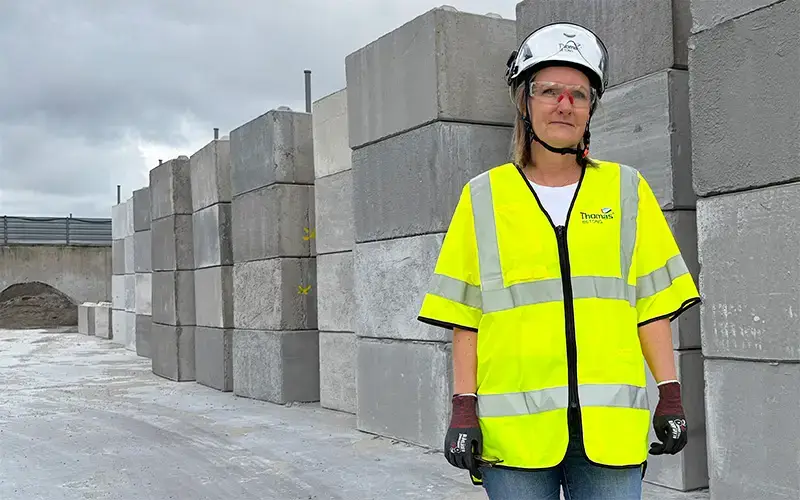
Eva Johansson is the HSE Manager at Thomas Betong in Sweden and is responsible for the company's vibration risk assessment activities.
Regulations, exposure limits, and employer responsibility
The EU Vibration Directive and Swedish regulations clarify the employer’s responsibility to assess, measure, and reduce exposure. This is not only about numbers and limit values, but about understanding which tasks cause vibrations, how long people are exposed, and what measures are most effective in reducing risk.
“We need to recognize vibrations as just as important a risk as noise, chemicals, or falls. The earlier we identify the risks, the better our chances of preventing long-term injuries,” says Eva Johansson, HSE Manager at Thomas Betong.
Knowledge creates confidence and sustainable employees
Reducing the risk of vibration-related injuries requires much more than protective equipment. Of course, the right equipment must be in place, but we also need knowledge. Employees need to understand how vibrations work, which machines risk exceeding exposure limits, and how they can personally act to reduce exposure. This creates both confidence and a more sustainable work environment.
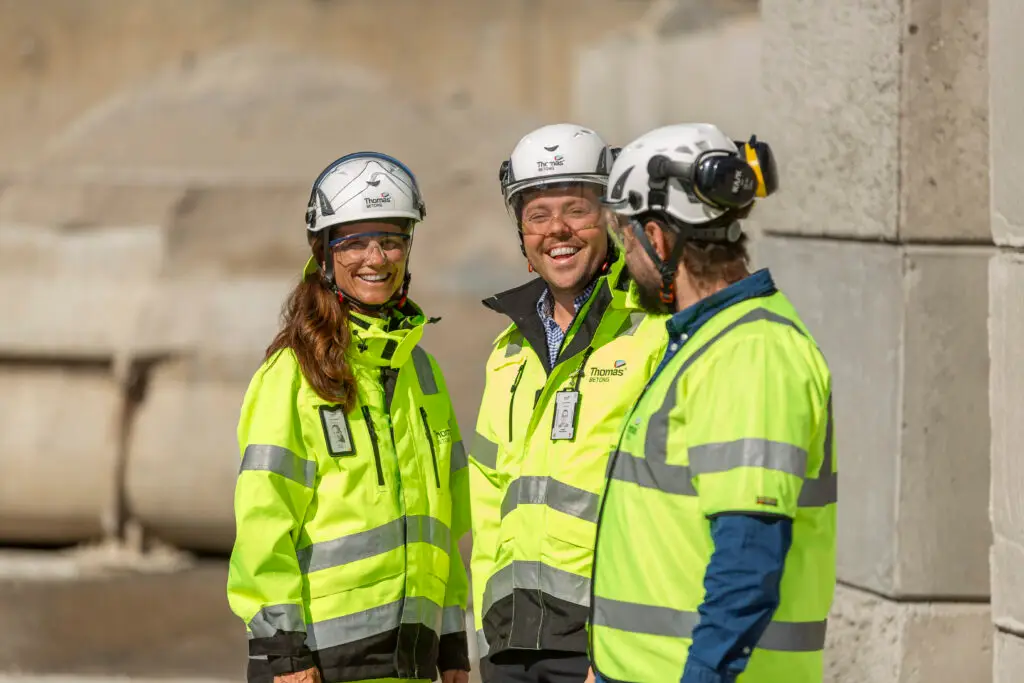
At Thomas Betong, a company-wide vibration risk assessment is currently underway. Eva visits all workplaces to share knowledge and discuss both risks and how to reduce them. Because when knowledge is present, risk assessments become a natural part of everyday work, not just another binder on the shelf.
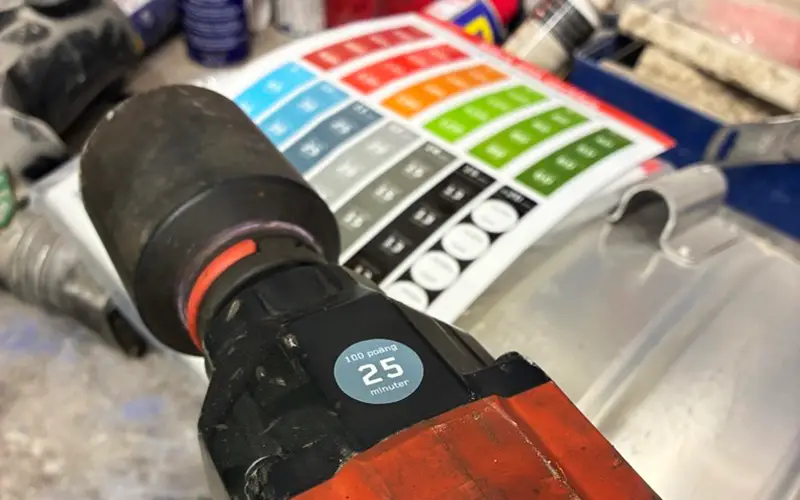
“We have chosen to create simple adhesive labels that we place on the tools used in daily work. This can be anything from a small drill to a large power trowel or grinding machine. Together, we review the manual and determine how many minutes the tool can be used each day. Almost every time, someone is surprised by how little daily use is required to risk injury,” says Eva.
The labels show the maximum number of minutes the tool can be used each day.
Preventive work on vibrations is fundamentally about protecting people’s health. When we provide our colleagues in Team Thomas with knowledge and the right tools, we create a safer workplace and support a longer, healthier, and more sustainable life.
Fact box
Effective vibration management is about combining technology, planning, and behavior: