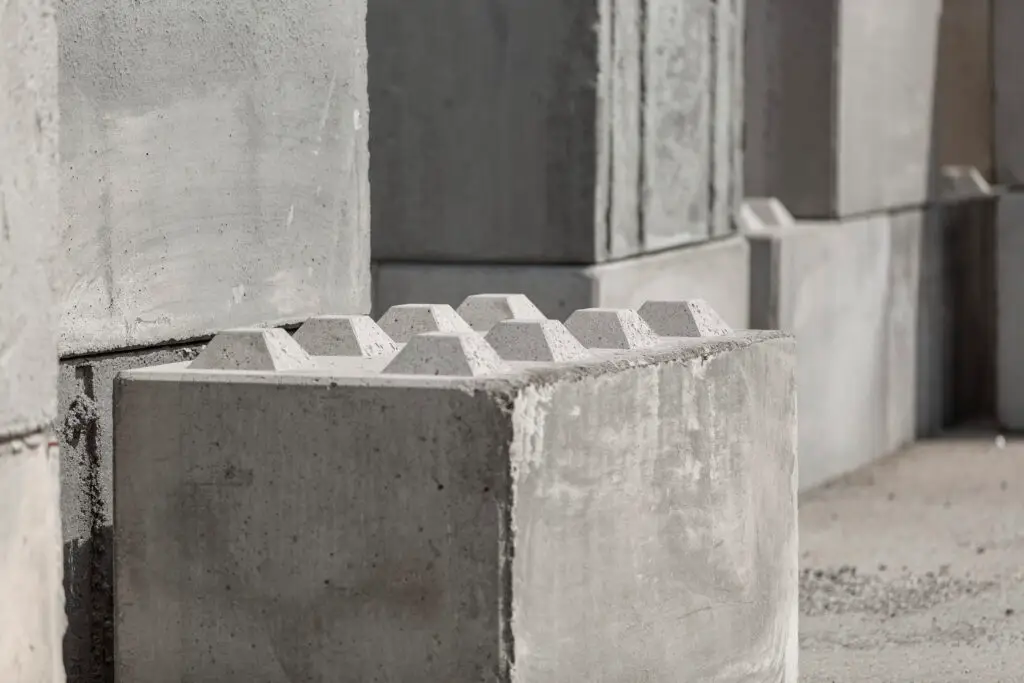
Heavyweight concrete is used where structures must withstand high loads, strong vibrations, or radiation. This can include structures below ground, offshore, in nuclear power plants, or in hospital X-ray departments.
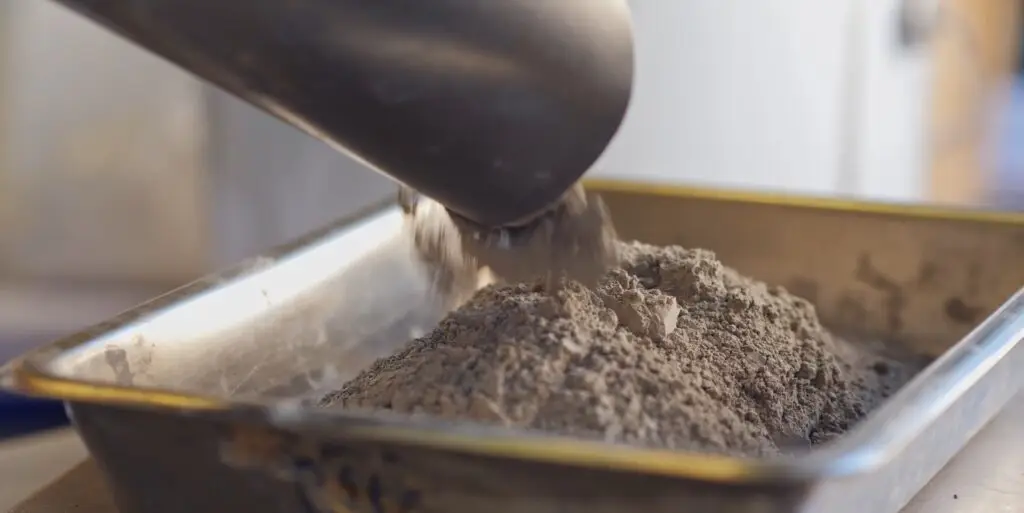
“Heavyweight concrete has many applications, where the type of aggregate used determines the type of project. The concrete is produced using heavy aggregates such as magnetite and barite. Magnetite is used when there is a need to shield against neutron radiation, while barite is used to absorb gamma radiation,” says Mats Karlsson, Product Manager at Thomas Betong.
The challenge: limited space
At the facility, a shaker rig mounted on air cushions was to be constructed for lifetime testing of large components. To withstand forces of up to 5 g*, a foundation with a very large concrete mass was required, at least 300 tons.
“The main challenge was that the available space was limited to just 69 m³. A foundation made with conventional concrete would have had far too little mass, only about 170 tons. We therefore had to think in a completely different way,” says David Salekärr, consultant at Centi Construction Management AB.
Strong collaboration delivers a heavy result
In collaboration with Thomas Betong, a heavyweight concrete was developed with a density** of approximately 4,500 kg/m³, almost twice that of conventional concrete, which has a density of around 2,400 kg/m³.
“Together with Thomas Betong, we developed a heavyweight concrete where magnetite was used to increase density. The result was a concrete structure with a total mass of just over 310 tons. It was cast in collaboration with Svensk Betongeffektivisering AB during the fall and handed over to the client at the beginning of December,” says David, who worked on behalf of BRAMab in the project.
“The concrete used in this project has exceptionally high density, which is essential for this type of structure. We have not heard of a similar project using heavier concrete. It could very well be the heaviest concrete used in Sweden,” Mats concludes.
* G-force is the load a person or object experiences during acceleration.
** Density describes how compact a material is, the relationship between mass and volume, while weight is the force acting on an object due to gravity. For reference, the density of water is 1,000 kg/m³.
Material overview
Magnetite (Fe₃O₄)
Properties: Gray-black iron oxide that helps reduce radiation, sometimes referred to as iron ore concentrate.
Applications: Nuclear power, vibration-resistant structures
Barite (BaSO₄)
Properties: A mineral that absorbs gamma radiation. Chemically stable and the primary source for extracting the element barium.
Applications: Radiation shielding in medical and industrial environments