Across our footprint, we see this shift reflected in what is actually being bid, scheduled, delayed, and poured. Project pipelines remain active, but planning cycles are tighter, risk tolerance is lower, and expectations on execution are higher than in previous growth phases.
Infrastructure Work Is Finally Showing Up in Real Projects
Road, utility, water, and airport projects are becoming more visible across the Southeast, particularly in fast-growing metros like Atlanta, Charlotte, and Raleigh. These projects tend to require phased pours and tight schedules, placing a premium on reliability across the entire supply chain.
Industrial Development Remains a Core Growth Engine
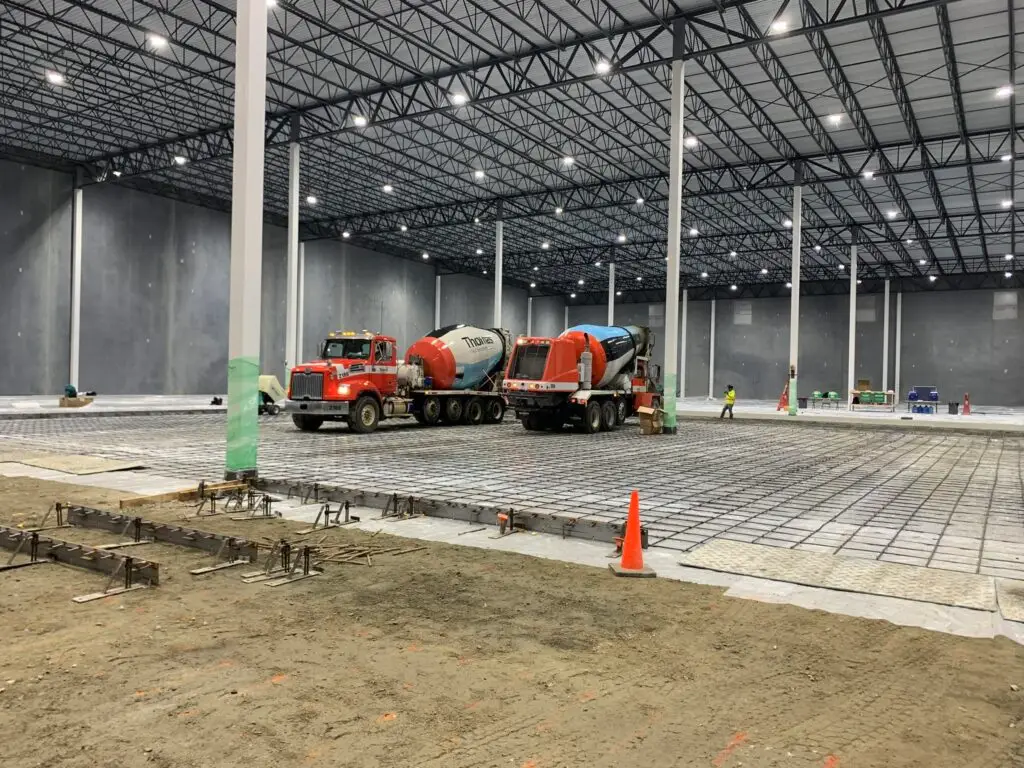
Manufacturing investment, logistics expansion, and distribution growth remain strong, particularly in Georgia and the Carolinas. Savannah and the surrounding logistics corridor continue to benefit from port-related development, while Upstate South Carolina remains closely tied to automotive and manufacturing investment. This work tends to be steadier, larger in scale, and more continuous in execution than commercial cycles.
Data Centers Have Become a Defining Part of the Market
While these projects do not always have the visibility of traditional commercial construction, data centers are quickly becoming a major driver of concrete demand across the region. The Southeast is well positioned for this sector due to available land and population growth, but early-stage constraints around power and utility capacity are beginning to influence site selection and project timing more directly.
Growth Across the Southeast Is Still Strong – But Not Uniform
Overall growth across the Southeast remains strong but unique to each market. While Raleigh and Charlotte are catching up with population growth with a mix of infrastructure and institutional work, Atlanta continues to see a diverse mix of commercial, infrastructure, and redevelopment activity. Savannah remains heavily influenced by port expansion, while smaller Coastal markets like Myrtle Beach are closely tied to residential and tourism-related development.
Two markets within the same state can look vastly different depending on infrastructure capacity, land availability, and investment timing.
Looking Ahead
The overall outlook remains positive, but the market is more demanding than in previous cycles. Projects require tighter coordination, greater flexibility, and consistent execution in an environment where delays and uncertainty carry higher consequences.
At Thomas Concrete Inc., this is reflected in how work is planned, sequenced, and delivered across the Southeast. As project complexity increases, our role is to support customers with dependable operations, local market expertise, and the ability to adapt to changing project requirements. By combining reliable supply, technical knowledge, and a strong regional presence, Thomas Concrete continues to meet the evolving needs of a market where timing, execution, and long-term partnership are increasingly critical.